Construction Debris Removal in the GTA: A Contractor's Guide
Dunk Disposal handles construction debris removal across the GTA, including drywall, concrete, lumber, and mixed renovation waste. Contractors can rent a dumpster for ongoing job site waste or book full-service removal for single-phase cleanouts. Same-day and scheduled pickups are available, with pricing based on weight, volume, material type, and site access. Call (647) 955-2619 for an on-site quote.
A job nearing completion often stalls over debris. Drywall scraps, broken concrete, and leftover framing pile up faster than crews can track site progress. Municipal bins fill within days on active renovation sites, and hauling loads to a transfer station eats into billable hours better spent finishing the job. For general contractors and renovation companies across the Greater Toronto Area, construction debris removal becomes a scheduling problem as much as a disposal one.
This guide breaks down what qualifies as construction debris, how Ontario regulations shape disposal choices, and which removal method fits different job site situations. It also covers pricing factors and how to plan removal around a project timeline so crews are not waiting on a bin pickup to keep working. Homeowners managing a DIY renovation will find the same information useful, since the debris categories and disposal rules apply regardless of who is doing the work.
Whether the job calls for a single cleanout or recurring pickups across a multi-phase build, understanding the construction debris removal GTA landscape helps keep projects on schedule and budgets predictable.
What Counts as Construction Debris?
Construction debris covers the physical waste generated during a build, renovation, or demolition. On a typical GTA job site, that includes:
• Drywall and plaster
• Lumber and framing offcuts
• Concrete and masonry
• Flooring materials, including tile and hardwood
• Roofing materials such as shingles and underlayment
• Insulation
• Metal scrap, including wiring and fixtures
• Windows and doors
• Tile and grout debris from a bathroom or kitchen tear-out
Not everything from a job site qualifies as standard construction debris. Asbestos-containing materials, lead paint waste, and other hazardous substances fall outside normal removal service and require separate handling under Ontario's hazardous waste rules. Contractors working on older properties, particularly homes built before 1990, should confirm whether materials like popcorn ceiling texture, vermiculite insulation, or old floor tile need testing before removal. Disposing of hazardous waste through a standard bin or removal service is a compliance risk, and projects that generate enough hazardous material may need to register as a generator with the province before disposal.
Debris That Can Be Recycled or Diverted
Not all construction waste heads to landfill. Ontario has diversion programs for several common materials, and separating them on-site reduces disposal costs and environmental impact. Clean, unpainted concrete can often be crushed and reused as aggregate rather than buried. Untreated wood scraps are accepted at many diversion facilities rather than sent to landfill alongside mixed waste. Metal scrap, including copper wiring, aluminum framing, and steel fixtures, holds scrap value and is routinely pulled out of mixed loads before the rest of the debris is disposed of.
Sorting debris by material type on larger job sites, rather than tossing everything into one bin, makes diversion easier and can lower the overall disposal fee charged for the load. The Ontario construction waste management guidelines outline which materials qualify for diversion programs and how contractors can document compliance for larger commercial projects that fall under provincial reporting requirements.
Debris That Goes to a Transfer Station or Landfill
Mixed loads, where multiple material types are combined without separation, typically cannot be diverted and are routed to a transfer station or landfill instead. Contaminated materials, such as wood treated with preservatives or drywall with mold damage, also fall into this category regardless of how the rest of the load is sorted. Non-recyclable fractions, including composite materials, laminate offcuts, and certain insulation types, follow the same path to landfill. Keeping loads separated where site space allows reduces how much debris ends up here and can lower the blended disposal rate for the job.
How Do Contractors Dispose of Renovation Waste in Ontario?
Contractors in Ontario generally choose from three disposal routes, and each fits different project sizes, budgets, and timelines.
Self-haul to a transfer station works for small jobs with a truck or trailer already on-site. It keeps costs predictable and gives a crew direct control over what gets dropped off, but it consumes crew time that could otherwise go toward billable work. Transfer station fees vary by municipality and material type, and it requires knowing local drop-off rules and operating hours, which differ across GTA municipalities including Toronto, Mississauga, and Brampton.
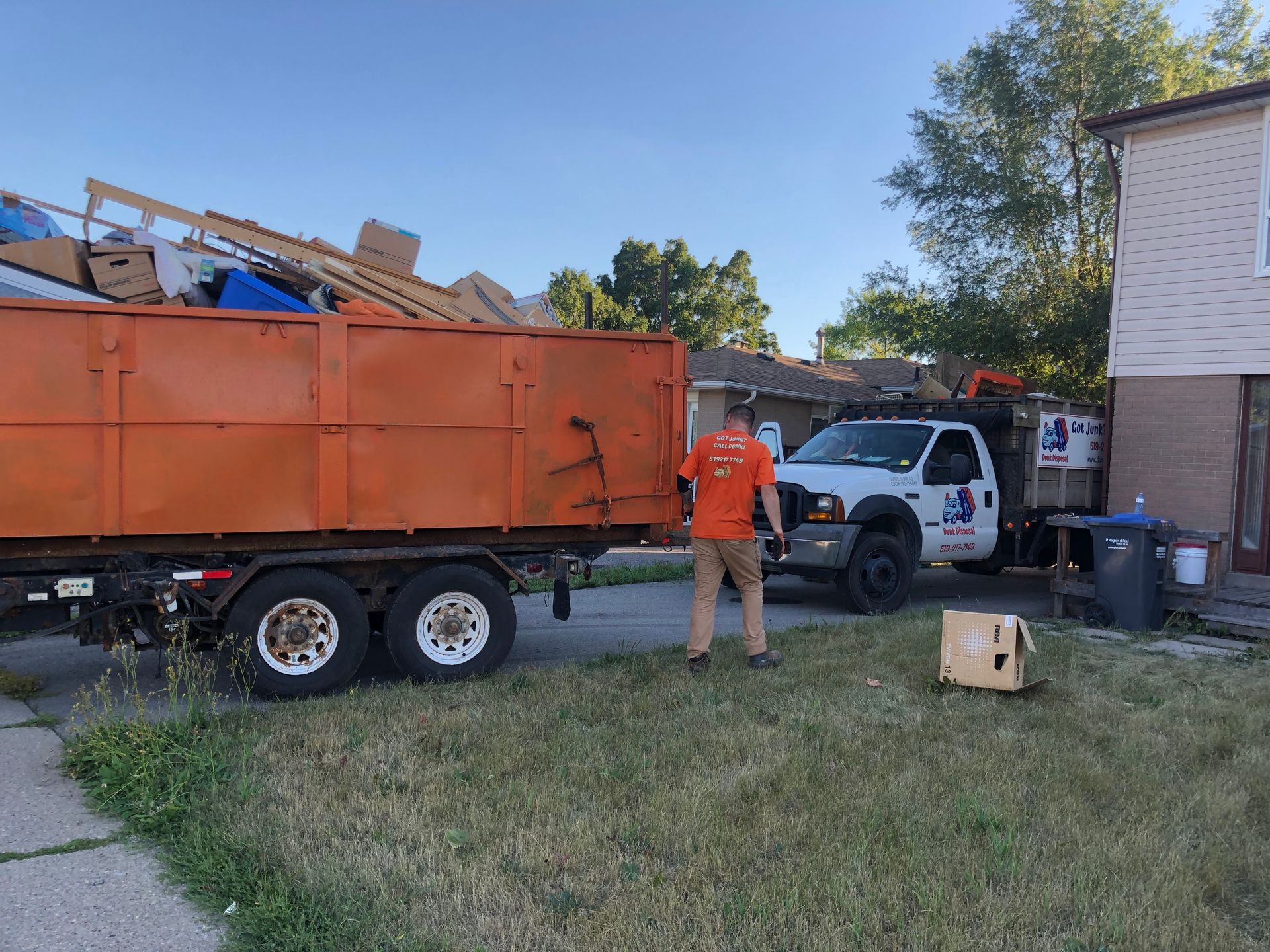
Renting a bin suits ongoing projects that generate waste steadily over days or weeks. A bin on-site means crews can dispose of debris as they go rather than stockpiling it in a corner of the property, and rental terms typically cover a set number of days along with weight limits built into the price. This is the more practical option for multi-phase renovations or new builds where waste accumulates continuously through several trades. Dumpster rental for job sites through a local provider avoids the back-and-forth of multiple self-haul trips and frees up a truck for other uses.
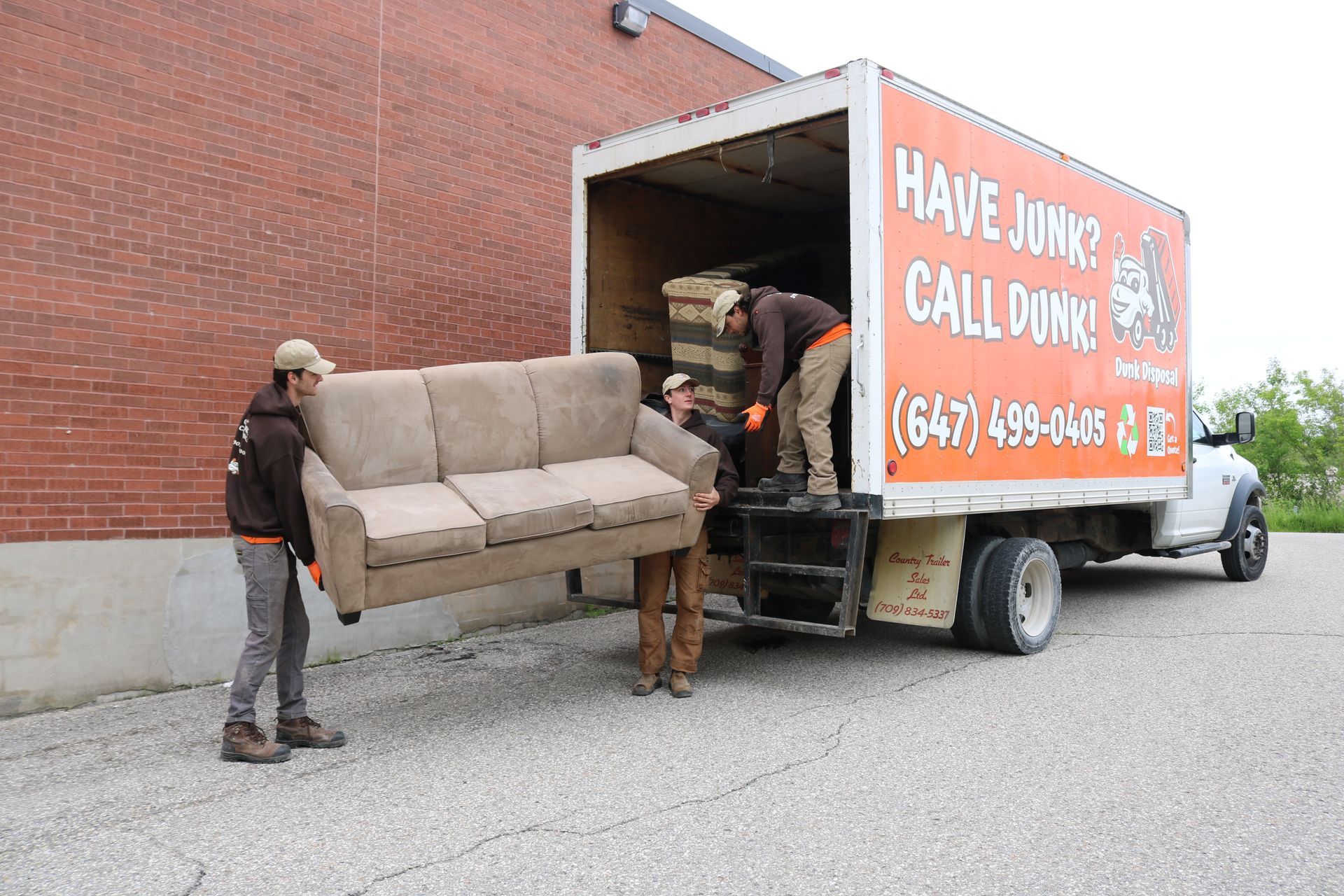
Hiring a full-service removal company covers the load, haul, and disposal without crew involvement at any stage. This route fits single-phase cleanouts, tight timelines, or jobs where labor is better spent finishing the work rather than managing waste logistics. A construction debris removal service typically provides same-day or scheduled pickups and handles sorting for diversion where applicable, which can matter for commercial jobs with waste reporting requirements.
The City of Toronto's guidelines for industrial and commercial waste outline municipal requirements that apply to larger commercial renovation and construction projects, which can affect which disposal route makes the most sense for a given job and timeline.
Can Junk Removal Take Drywall and Concrete?
Yes. Drywall, concrete, and other heavy construction materials are accepted, though they are priced differently than standard household junk because of their weight and density. Concrete, brick, and similar masonry materials are dense and weight-heavy, so loads are typically priced by weight rather than volume alone. Drywall, whether from demolition or offcuts left over from a build, is accepted in both bin rentals and full-service pickups, with volume being the primary pricing factor rather than weight.
Contractors working with a mix of drywall, concrete, and lighter materials like insulation or packaging should expect a blended rate that accounts for both weight and volume across the load. Getting an accurate quote usually means describing the load composition upfront, including whether concrete or masonry makes up a significant share of the material, since that shifts the pricing basis for the entire pickup.
Same-Day and Scheduled Pickups for GTA Job Sites
GTA contractors can call (647) 955-2619 for same-day construction debris removal when a job site needs an unplanned pickup, or set up a recurring removal schedule for projects that generate waste on an ongoing basis. Recurring schedules work well for multi-phase renovations where debris builds up between milestones, keeping the site clear without requiring a new call for every load that needs to move.
Dumpster Rental vs. Full-Service Removal for Job Sites
Choosing between a dumpster and full-service removal comes down to how the waste accumulates on-site and how much crew time is available to manage it.
A dumpster works best for:
• Multi-day or multi-week projects generating waste continuously
• Sites with room to place and access a bin throughout the job
• Crews that prefer to load debris on their own schedule
• Projects where daily waste volume is unpredictable
Full-service removal works best for:
• Single-phase cleanouts, such as post-demolition or a final sweep
• Jobs where crew time is limited and better spent on billable work
• Sites without space for a bin to sit for an extended period
• Situations requiring a fast, one-time pickup rather than ongoing container access
Some contractors combine both approaches across a project timeline, starting with a bin during the demolition and framing phases, then switching to full-service pickups for the final cleanout once the bin's rental period ends and the site is closer to handoff. Demolition service providers can often coordinate both stages under one point of contact, which simplifies scheduling across a longer project rather than juggling separate vendors.
Job site conditions also influence which disposal option makes sense beyond the material list alone. A downtown Toronto renovation with no driveway or laneway access often rules out a large bin, pushing the job toward full-service pickups instead. A suburban new build in Brampton or Mississauga with open lot space can usually accommodate a bin for the full length of the project without access issues. Contractors quoting a job should factor site access into the disposal plan early rather than discovering a bin will not fit once demolition has already started.
Weather and seasonal scheduling also shape debris removal planning across the GTA. Winter jobs sometimes see slower pickup availability due to road conditions, while spring and summer bring the heaviest demand for both bin rentals and full-service crews as renovation season peaks. Booking a removal partner with flexible scheduling, rather than relying solely on same-day availability, reduces the risk of a stalled timeline during the busiest months of the year.
Communication between the general contractor and the removal provider also affects how smoothly debris moves off-site. Sharing the project timeline upfront, including expected demolition dates and finish milestones, allows a removal partner to plan pickups or bin swaps around the actual schedule rather than reacting to last-minute calls. This is particularly useful on larger commercial renovation projects where multiple trades generate waste at different points and coordination prevents the site from becoming cluttered between phases.
How Much Does Construction Debris Removal Cost in the GTA?
Several factors determine the cost of a pickup or rental:
• Weight: Concrete, brick, and masonry are priced by weight given their density
• Volume: Bulkier but lighter materials, like insulation or drywall, are priced more by volume
• Material type: Mixed loads with recyclable materials may cost less than fully contaminated loads
• Access: Ground-floor loading is faster than hauling debris down stairs or through tight hallways
• Truck size required: Larger loads need larger trucks, which affects the base rate
Because these factors vary significantly between job sites, most providers quote pricing after seeing the load or getting a description of it rather than publishing flat rates that would not reflect the actual job. An accurate quote typically requires photos or an on-site assessment, especially for loads combining several material types across different phases of a renovation.
Crew safety also factors into the decision between self-haul and hired removal. Lifting and hauling concrete, tile, or masonry manually carries injury risk, particularly when a job runs behind schedule and workers rush to clear debris at the end of a long day. Handing that portion of the work to a removal crew equipped for heavy loads reduces strain on the contractor's own team and keeps labor focused on tasks that require their specific trade skills rather than manual hauling.
Documentation matters on commercial jobs as well. Some GTA municipalities and property managers request proof of proper disposal for construction waste, particularly on larger renovation or demolition projects subject to permit conditions. Working with a removal provider that can supply disposal records or diversion summaries simplifies that reporting step rather than leaving the contractor to track it manually across multiple loads and pickup dates.
How to Plan Debris Removal Around a Project Timeline
Debris removal works best when it is scheduled around project phases rather than treated as an afterthought once the site is already buried in waste. A phased approach typically breaks down into three stages.
The rough demo phase generates the bulk of heavy debris, including old drywall, flooring, and fixtures pulled out at the start of a renovation. This is often the point where a bin makes the most sense, since waste accumulates quickly and continuously as demolition moves through the property.
The finish phase slows down in terms of waste volume but still includes offcuts, packaging, and installation debris from cabinets, flooring, and fixtures going in. A smaller bin or a scheduled pickup usually covers this stage without needing a full container on-site for weeks.
The final sweep clears remaining scraps, leftover packaging, and any materials not used during the build before handoff to the client. This is typically where full-service removal fits best, since it is a single pickup rather than an ongoing need for container space.
Booking lead times matter, particularly during peak renovation seasons in spring and fall when demand for bins and pickups rises across the GTA and availability tightens. Contractors managing tight schedules should book ahead for planned phases and keep a same-day option in reserve for unexpected debris, such as material that fails inspection, gets damaged, or needs to be replaced mid-project.
A dumpster and a full-service pickup are not mutually exclusive across the life of a single project, and treating them as a toolkit rather than an either-or choice tends to produce the smoothest results. A duplex renovation in the GTA, for example, might start with a fourteen-day bin rental during demolition and rough framing, when debris volume is highest and unpredictable. Once framing wraps up and the pace of waste generation slows, the bin can be swapped out or picked up early, with a single full-service call scheduled for the final cleanout after finishes go in. This kind of phased plan keeps disposal costs aligned with actual waste volume rather than paying for container space that sits mostly empty during the finish phase, while still covering the heavy early demolition load without overloading a crew's own truck capacity.
Conclusion
Construction debris removal in the GTA works best when contractors match the disposal method to the project phase rather than defaulting to one option for the entire job. A dumpster covers ongoing waste through demolition and framing, while full-service removal handles single-phase cleanouts and tight timelines. Understanding what qualifies as construction debris, how Ontario's diversion rules apply, and what drives pricing helps keep a project moving without disposal decisions slowing down the crew.
Recent Posts