Estate Cleanout in the GTA: What to Expect and How to Get Through It
An estate cleanout in the GTA generally moves through three phases: securing valuables and documents, sorting donations, and removing everything left behind with a professional crew. Pricing is based on volume and property access, most cleanouts wrap up in one to three days, and same-day or next-day scheduling is available for families working against a probate or property sale deadline.
An estate cleanout is rarely just a logistics problem. It usually follows a loss, and it comes loaded with decisions that go far beyond deciding what fits in a moving truck: what to keep, what to donate, and what simply has to go. For adult children and executors across the Greater Toronto Area, the scope of the work can feel unmanageable, particularly when a property needs to be ready for sale or a lease needs to end by a fixed date.
The good news is that an estate cleanout follows a predictable process once it gets moving. Breaking the work into phases, valuables first, donations second, full removal last, turns an overwhelming task into a sequence of manageable steps. This guide walks through what to expect at each stage, how much the process typically costs in the GTA, and how a professional crew can take the physical burden off a family's plate during an already difficult time.
How Do You Clean Out an Estate Quickly?
The fastest and least stressful estate cleanouts follow a clear order of operations. Working through a property room by room without a plan tends to slow the process down and increases the odds that something important gets set aside or lost in the shuffle. A phased approach protects what matters most first, then moves systematically toward a fully cleared property, rather than trying to make every decision at once.
Executors managing an estate on a deadline benefit most from this structure, since it allows different parts of the process to move in parallel. Documents can be reviewed while donation pickups are being scheduled, and a removal crew can be booked well before the final sorting decisions are finished.
Phase 1: Identify and Secure Valuables
Before any removal crew steps through the door, the property should be checked for documents, jewelry, financial records, and family heirlooms. Bank statements, wills, insurance papers, and safety deposit box keys are easy to overlook in a rushed cleanout and difficult, sometimes impossible, to replace once discarded. Setting these items aside in a single secured location, a locked closet, a labeled bin, or a safe, prevents accidental loss during the faster-moving stages that follow.
This phase does not need to be exhaustive on day one. A careful walkthrough that flags rooms with financial records, jewelry boxes, and filing cabinets is usually enough to protect the essentials before the pace of the cleanout picks up.
It also helps to check less obvious spots: inside coat pockets, taped to the underside of drawers, or tucked inside books, since older generations sometimes stored cash or important papers outside a traditional filing system. A second pass through commonly overlooked areas, closets, garages, and storage lockers, before removal begins can prevent a difficult surprise later.
Phase 2: Sort What Can Be Donated or Sold
Once valuables are secured, the next phase is separating items that still have use left in them. Furniture in good condition, clothing, small appliances, and kitchenware can often be donated rather than discarded, which reduces both landfill waste and the volume that needs to be hauled away. The Habitat for Humanity GTA ReStore accepts a wide range of household donations and offers pickup for larger furniture pieces, which can simplify this phase considerably for a family without the time or vehicle to make multiple donation runs. Many donation centers also provide a receipt that can be used for tax purposes.
Anything with clear resale value, antiques, collectibles, or higher-end furniture, may be worth a separate appraisal before it gets folded into general donations. A quick photo and a call to a local estate sale company can confirm whether an item is worth listing separately.
Phase 3: Book a Cleanout Crew for the Rest
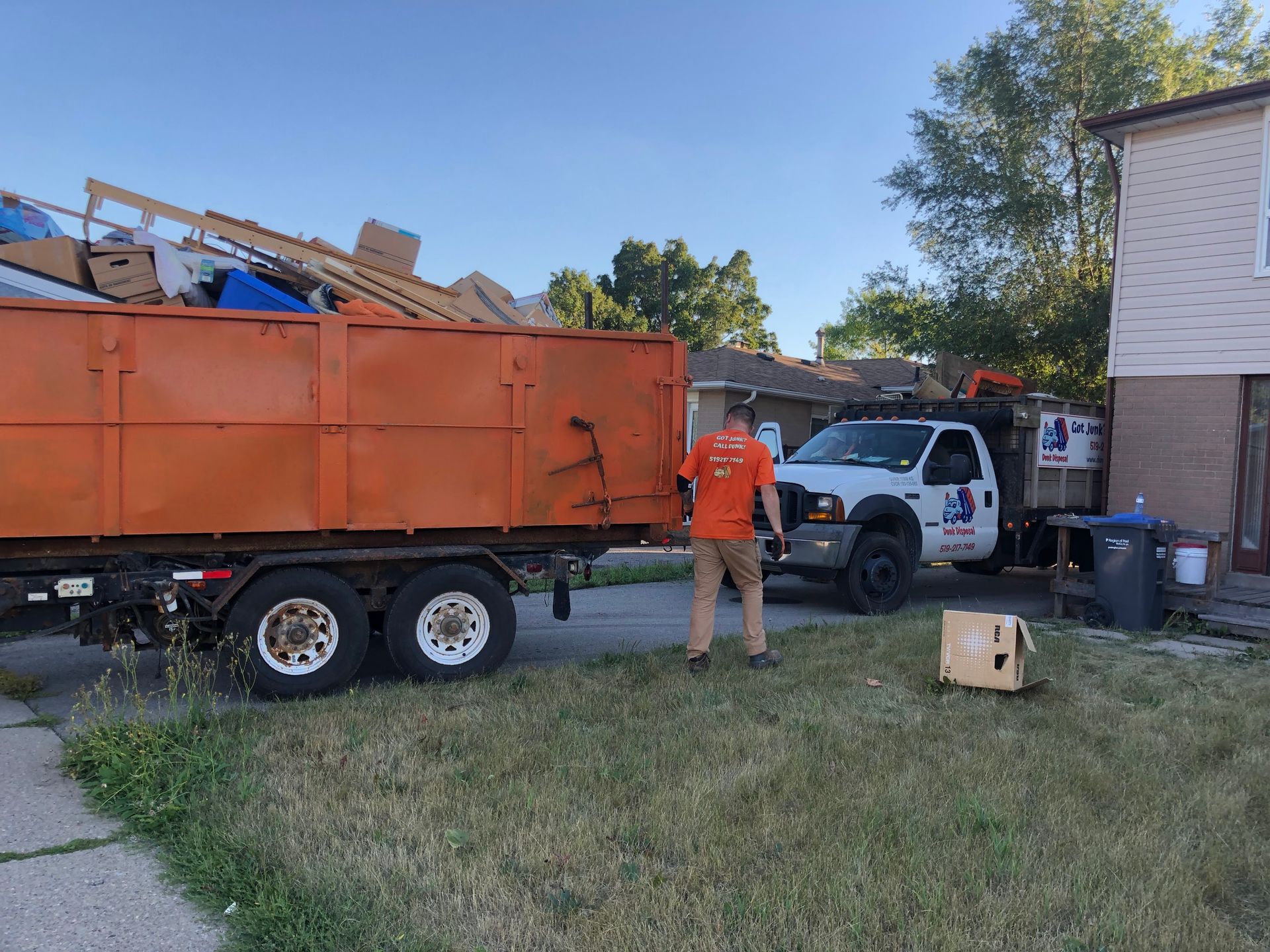
Everything that is not kept or donated falls into the final phase: full removal. This is typically the largest volume of material in an estate cleanout and the most physically demanding part of the process. A full-service junk removal crew can clear an entire property in a single visit, handling furniture, appliances, and general household debris without requiring a dumpster rental or a lengthy do-it-yourself hauling effort spread across multiple weekends.
Scheduling this phase early, even before every sorting decision is final, keeps the overall timeline moving and gives the family a firm date to work toward.
How Long Does an Estate Cleanout Take?
Timeline depends heavily on property size and how much sorting has already happened before a crew arrives. A condo or small bungalow that has been mostly sorted can often be cleared in a single day. A larger home filled with decades of belongings, or one that still needs a full valuables and donation sort, may take several days spread across multiple visits.
Weather, parking restrictions, and building rules can also factor into scheduling, particularly for high-rise units in downtown Toronto where loading dock access needs to be booked in advance. Confirming these logistics early, alongside the removal crew, helps avoid delays once the cleanout is underway.
Common Estate Cleanout Mistakes to Avoid
A few recurring missteps tend to slow an estate cleanout down or add unnecessary cost. Knowing what to watch for ahead of time can keep the process on track.
● Starting removal before valuables and documents are fully secured, which risks accidentally discarding something important
● Sorting item by item instead of by phase, which slows the process and makes it harder to see overall progress
● Skipping an upfront quote and booking based on a rough estimate, which can lead to surprise costs on removal day
● Underestimating access challenges like stairs, long carry distances, or restricted building hours, which can extend the timeline
● Waiting until a listing or move-out date is imminent to book a crew, which limits scheduling flexibility during a busy season
What Happens to Furniture During an Estate Cleanout?
Furniture decisions in an estate cleanout usually come down to condition rather than sentiment. Pieces that are clean, structurally sound, and free of significant damage are strong candidates for donation or resale. Furniture that is worn beyond use, water damaged, or shows signs of pest activity is generally not accepted by donation centers and needs to be removed as part of the standard cleanout instead.
A professional furniture removal crew typically sorts furniture on-site during the initial walkthrough, separating donation-eligible pieces from items headed for disposal. This on-site sorting saves a family from making dozens of individual condition assessments piece by piece and keeps usable furniture out of landfill whenever a suitable donation option exists. Large or heavy items, sectional sofas, dressers, mattresses, and dining sets, are usually the pieces families most want handled by professionals rather than moved manually.
Mattresses and upholstered pieces deserve a closer look before a donation decision is made, since most donation centers will not accept them if there is any sign of staining, odor, or wear. In those cases, responsible disposal through a removal crew keeps the item out of an illegal dumping situation and off the curb, where bulky furniture can sit for days waiting on a scheduled pickup.
Can a Junk Removal Company Help With a Hoarder House?
Yes. Hoarder house cleanouts share the same basic structure as a standard estate cleanout, but the scale and approach differ in meaningful ways. Volume is usually much higher, with belongings often filling every room, hallway, and storage space in the home. A single visit may not be enough to fully clear the property, and multiple visits are common depending on the extent of the accumulation.
The pace of a hoarder house cleanout also tends to be slower and more deliberate than a standard estate job, allowing for careful, respectful sorting rather than a rushed haul-out. Experienced crews approach these situations with discretion, understanding that hoarder cleanouts often carry emotional and sometimes safety-related sensitivity beyond a typical estate. A dedicated estate and hoarder house cleanout service plans around the property's specific condition, structural access, and volume rather than applying a one-size-fits-all timeline or price.
Communication also matters more in a hoarder cleanout than in a standard job. Families are often making decisions in real time as items are uncovered, and a crew comfortable pausing to check in, rather than moving at a fixed pace, tends to make the process feel far less overwhelming.
A Compassionate Approach to a Difficult Job
Clearing an estate is never just about hauling items to a truck. A pressure-free estimate can help a family understand the scope of the work and the expected cost before anything is scheduled, with flexible timing that accommodates the emotional weight the process often carries. Crews experienced in estate and hoarder cleanouts across the GTA understand that every property, and every family, moves through this differently.
How Much Does an Estate Cleanout Cost in the GTA?
Estate cleanout pricing is generally based on volume rather than a flat per-room rate, since two similarly sized three-bedroom homes can hold very different amounts of furniture and belongings. A property packed with decades of accumulated items will naturally cost more to clear than one that has already been partially sorted.
Access also plays a significant role in pricing. A walk-up unit with several flights of stairs and no elevator takes longer to clear than a ground-floor property with a driveway or loading area nearby. Narrow hallways, tight parking, and long carry distances from the door to the truck can all add time to the job.
Most reputable providers offer an upfront quote before any work begins, which removes the guesswork that often adds stress to an already difficult process. Load-based pricing, where cost scales with how much of the truck gets filled, tends to be more transparent than a flat estimate given sight unseen. Ontario's official guide to settling an estate outlines the broader legal and financial steps involved in estate administration, which can help executors budget for the physical cleanout alongside other estate-related expenses like probate fees and property taxes.
It is worth asking whether a quote includes labor, disposal fees, and cleanup, since some lower initial estimates leave these out and add them back in once the job is underway. A clear, itemized quote before work starts is one of the simplest ways to avoid cost surprises during an already stressful process.
How to Plan an Estate Cleanout Around a Tight Timeline
Estate cleanouts often run against a deadline that has nothing to do with how ready a family feels to tackle the work. Probate can set a schedule for settling the estate, a property sale may already be listed with a closing date attached, and a rental unit may need to be vacated by a specific move-out date to avoid additional costs.
Same-day and next-day scheduling is often available for exactly this reason. Booking a cleanout crew as early as possible in the process, even before every valuable has been sorted or every donation has been arranged, allows the removal phase to run in parallel with other estate tasks rather than waiting until everything else is finished.
Coordinating an Estate Cleanout With a Property Sale
Real estate agents coordinating a listing often need a property cleared by a specific date to allow staging, photography, and showings to begin. Estate cleanouts scheduled around a listing timeline benefit from clear communication between the agent, the family, and the cleanout crew, so the property is empty, swept, and ready on the agreed date rather than partially cleared at the last minute.
A cleared property also tends to show better. Empty rooms photograph with more space and fewer distractions than rooms still filled with a previous owner's belongings, which can make a meaningful difference in how quickly a listing attracts offers in a competitive GTA market.
Agents working with several estate listings at once often build a short buffer into the pre-listing schedule to allow for a full cleanout, since even a well-organized property can turn up unexpected volume once closets, garages, and basements are fully checked.
What to Keep, What to Donate, and What to Remove
A simple three-category framework can make sorting decisions faster and less emotionally taxing, especially in the early days of a cleanout when every decision can feel significant.
Keep
● Financial and legal documents
● Jewelry and family heirlooms
● Photographs and personal keepsakes
● Items named in a will or specifically requested by family members
Donate
● Furniture in good, usable condition
● Clothing, linens, and textiles
● Working small appliances and electronics
● Kitchenware, books, and general household goods
Remove
● Damaged or heavily worn furniture
● Expired food and household chemicals
● Broken appliances and electronics
● General clutter, packaging, and debris
For smaller volumes, the City of Toronto's large item pickup program can handle a handful of bulky curbside items on a scheduled date. For a full property cleanout, a professional crew is typically faster and covers everything in a single visit rather than requiring multiple scheduled pickups spaced weeks apart.
Conclusion
The physical part of an estate cleanout does not have to add to an already heavy load. With valuables secured early, donations sorted thoughtfully, and a professional crew handling the rest, a property across the GTA can be cleared efficiently and with the respect the process deserves. For a compassionate, pressure-free estimate on an estate or hoarder house cleanout, call
(647) 955-2619.
Recent Posts